The Case for Continuous: One Lighting Setup, Two Deliverables
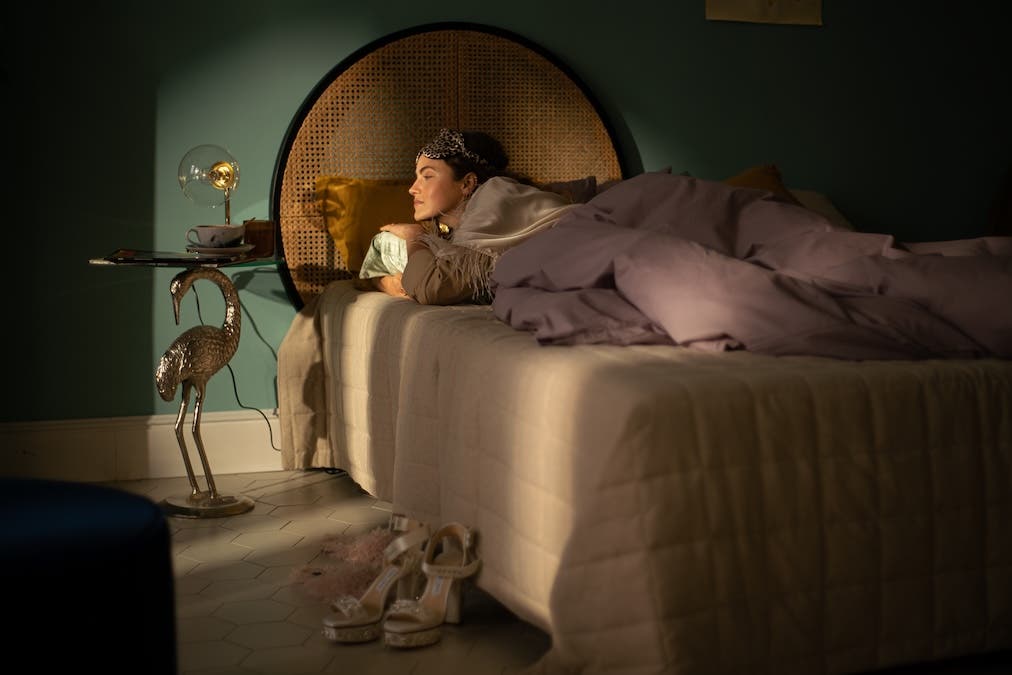
For the last 5–10 years, clients (both small and large) have been asking for double and sometimes triple duty from the same set. They want continuous light for video ads, high-res photos for print or socials, and vertical behind-the-scenes cuts for social media, all captured simultaneously.
As a gaffer, I have to find a way to light a set so that it works as well as possible for everyone. That can be a daunting task given the conflicting technical requirements. Competing interests under heavy time constraints force us to move fast from setup to setup, which often means very little lighting tweak time between units. The solution I’ve found is lighting more broadly with larger sources, allowing both the cinematographer and photographer to move freely within the scene.
The Exposure Gap Between Motion and Stills
If either camera operator steps in front of a hard directional source, it kills the shot. You end up with their shadow across the talent or background. What I needed was a source large enough and soft enough to wrap around anyone stepping into the space without casting a harsh shadow. More importantly, I needed enough raw output to give the photographer genuine exposure latitude.
Film lighting simply doesn’t demand as much output per frame as still photography. The key source needs enough punch not just for a cinematographer shooting at 24 fps (1/48s shutter, ISO 800), but also for a photographer shooting at 1/200s or faster, at a low native ISO, and with a deeper depth of field. Traditional constant lights usually fail to match an effective strobe’s output. However, by running an Aputure 1200D through a 12×12 full diffusion frame, I created a setup that gave both professionals room to work without stopping the floor. It’s not perfect, but it’s a workable compromise.
…